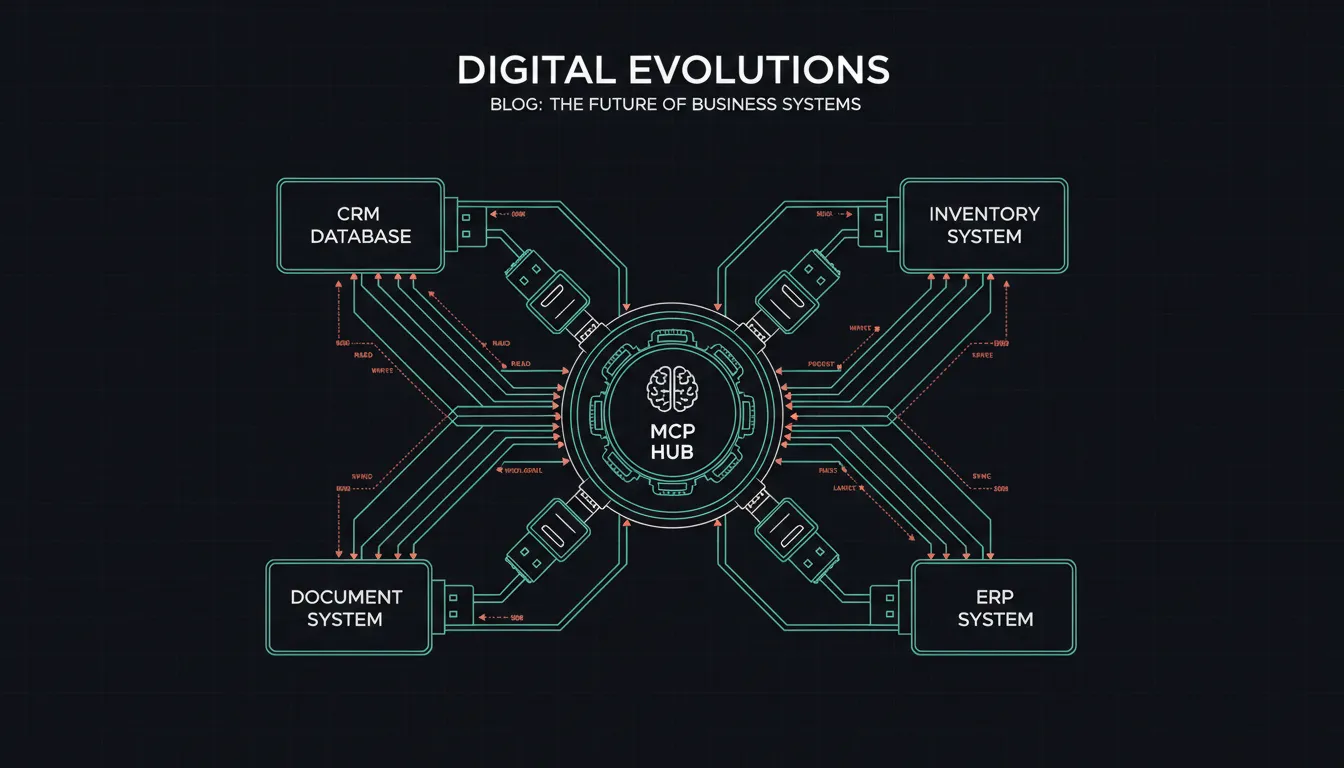
MCP servers: connecting AI to your actual business
The biggest gap in enterprise AI isn’t the models — it’s the plumbing. Your AI assistant can write poetry but can’t check your inventory system. MCP (Model Context Protocol) fixes this.
The integration problem
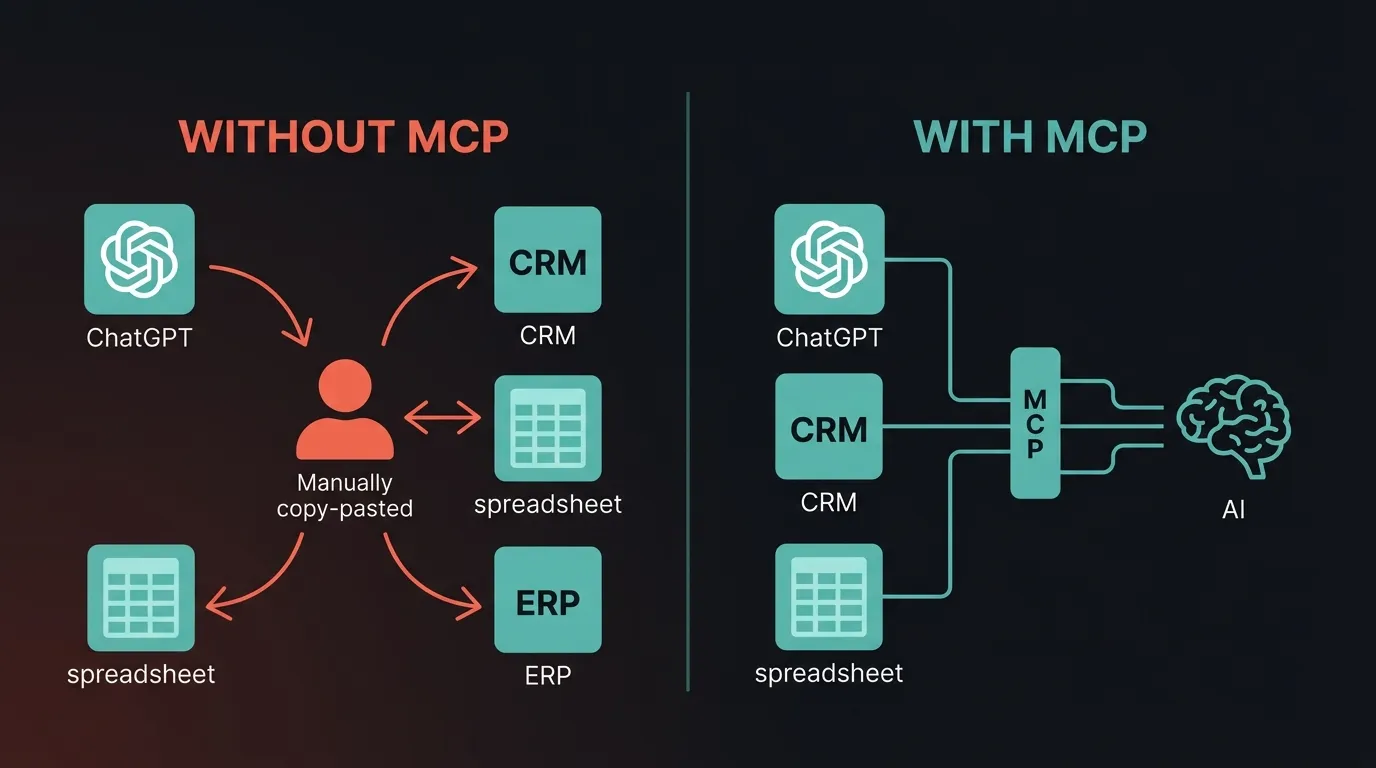
Every business has internal systems — ERPs, CRMs, databases, spreadsheets, legacy apps. AI models can’t see any of them. So you end up copy-pasting data between ChatGPT and your actual tools. That’s not automation — that’s a human being the API.
What MCP does
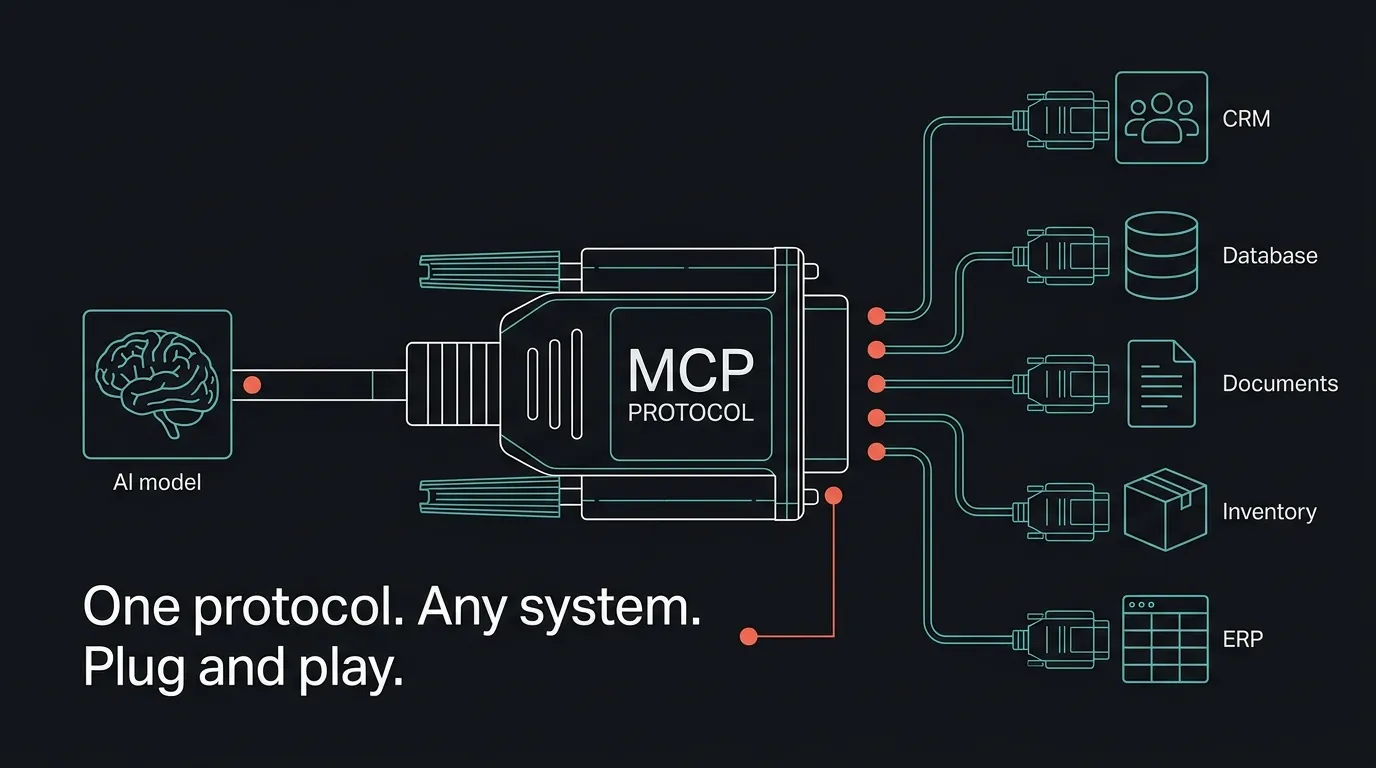
MCP is an open protocol that lets AI models connect to external tools and data sources through a standardised interface. Think of it as USB for AI — plug in any system, and the model can read from it and act on it.
Real examples we’ve built
- CRM integration — AI reads customer history before suggesting responses
- Inventory MCP — Check stock levels, create purchase orders, all through natural language
- Document retrieval — AI pulls from your actual knowledge base, not its training data
Why this matters for SMEs
Large enterprises have teams to build custom integrations. SMEs don’t. MCP levels the playing field — you get the same AI-powered workflow automation without the enterprise integration budget.